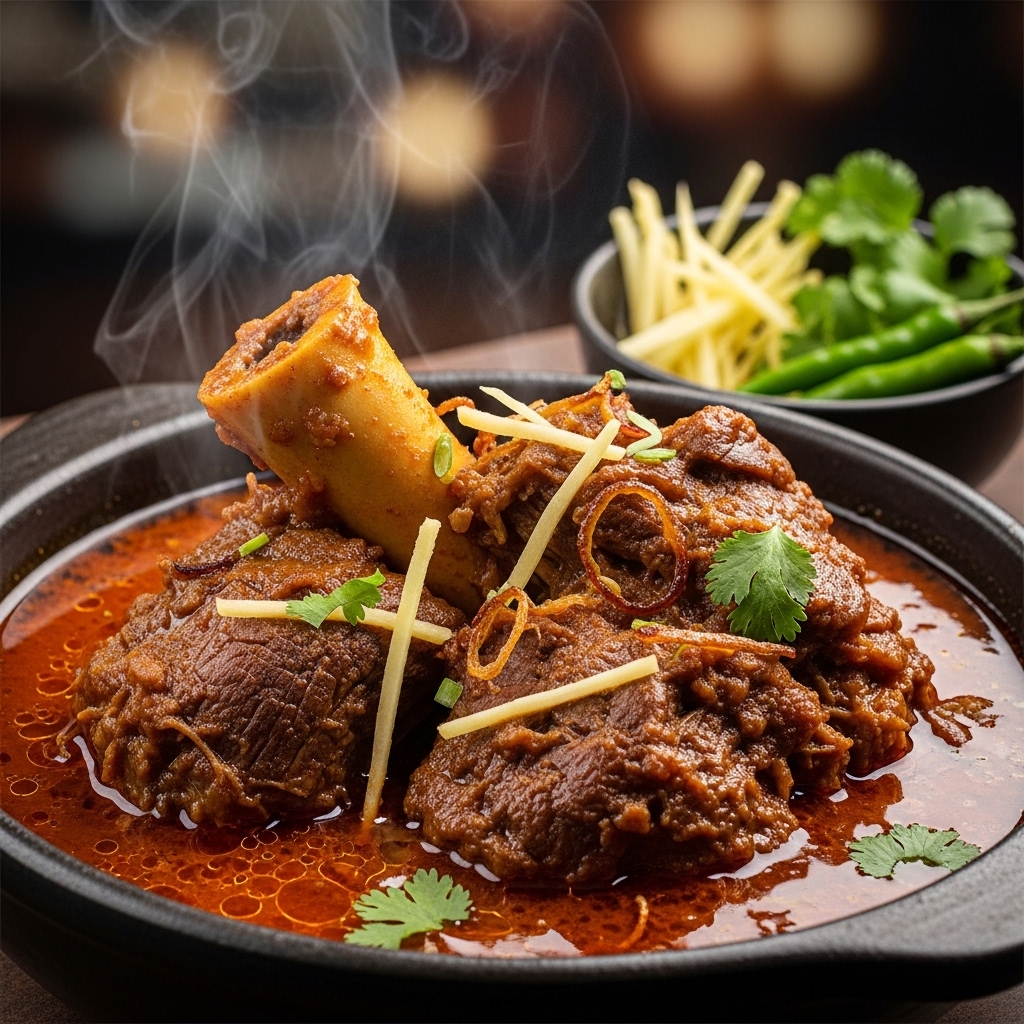
There are dishes you eat, and then there are dishes you experience. Nihari — slow-braised beef shank simmered in a broth of ginger, cardamom, and a dozen other whole spices — falls firmly into the second category. In Karachi, it is the meal that ends a long night and starts a slow morning. It is eaten in small restaurants before dawn by truck drivers and surgeons sitting at the same table. It is, in every sense, a great equaliser.
A brief history of nihari
Nihari traces its origins to the Mughal kitchens of Old Delhi, where it was slow-cooked overnight and served as the morning meal (nihar is Arabic for "morning"). When the Mughal empire declined and many Delhi families migrated to Karachi following partition, they brought the recipe with them. What evolved in Karachi's Lyari and Burns Road neighbourhoods is something slightly different from Delhi's version — deeper, spicier, with more of an oily surface sheen that signals proper slow-cooking.
"A Karachi nihari should coat the back of a spoon. If it doesn't, you haven't cooked it long enough."
— an old waala from Burns Road, 2022
The ingredients that matter
The quality of nihari lives and dies by three things: the cut of meat, the freshness of your whole spices, and your patience. There are no shortcuts here.
Use beef shank (nalli) with the bone in — the marrow renders into the broth and is arguably the best part of the whole dish. For the spice blend, toast whole spices in a dry pan for 90 seconds before grinding. This single step separates a good nihari from a transcendent one.
The method: low and slow
Begin with a heavy-bottomed pot or Dutch oven. Sear the meat in batches in ghee until deeply browned — don't rush this. Proper colour on the meat builds the base flavour of the entire broth. Once all the meat is seared, add onions caramelised to a dark gold, then the ground spice mix, then water enough to just cover everything.
Cook on the lowest possible heat, partially covered, for 6–8 hours. Check every hour. Add water if the level drops below the meat. The broth will go from light and soupy to thick and lacquered. You want the latter.
How to serve it right
Nihari is served with:
- Freshly baked naan or kulcha — not refrigerated, not reheated, freshly baked
- Thinly sliced ginger — strips, not grated
- Chopped fresh coriander and green chillies
- A wedge of lime squeezed in at the last second
- Fried onions (birista) scattered on top
The marrow bone, if your butcher has left it intact, should be cracked at the table and scooped out with a small spoon. This is the highlight of the meal.
The full recipe
Below is the full ingredient list and method. The spice blend (nihari masala) can be made in a large batch and stored in an airtight jar for up to 6 weeks.
For the nihari masala: 2 tbsp coriander seeds, 1 tbsp cumin seeds, 1 tsp fennel seeds, 6 green cardamom pods, 2 black cardamom pods, 1 tsp black peppercorns, 1 small cinnamon stick, 4 cloves, 1 tsp dried ginger powder, ½ tsp nutmeg, ¼ tsp mace, 2 tbsp red chilli powder, 1 tbsp wheat flour (for thickening).
For the nihari: 1.2kg beef shank, bone-in · 4 tbsp ghee · 2 large onions, thinly sliced · 4 garlic cloves, minced · 2-inch piece of ginger, grated · 3 tbsp nihari masala · 1.5L water · Salt to taste.