Bread · Everyday

Tandoori Roti — Soft and Charred, No Tandoor Needed

Whole wheat dough, puffed and charred in a screaming-hot home oven on an inverted baking tray. This method replicates the results of a tandoor better than you expect. Once you eat fresh roti, you'll never go back to shop-bought.

Dough rest
30 min
Cook/roti
3 min
Makes
8 rotis
Difficulty
Easy
Equipment
Oven + tray
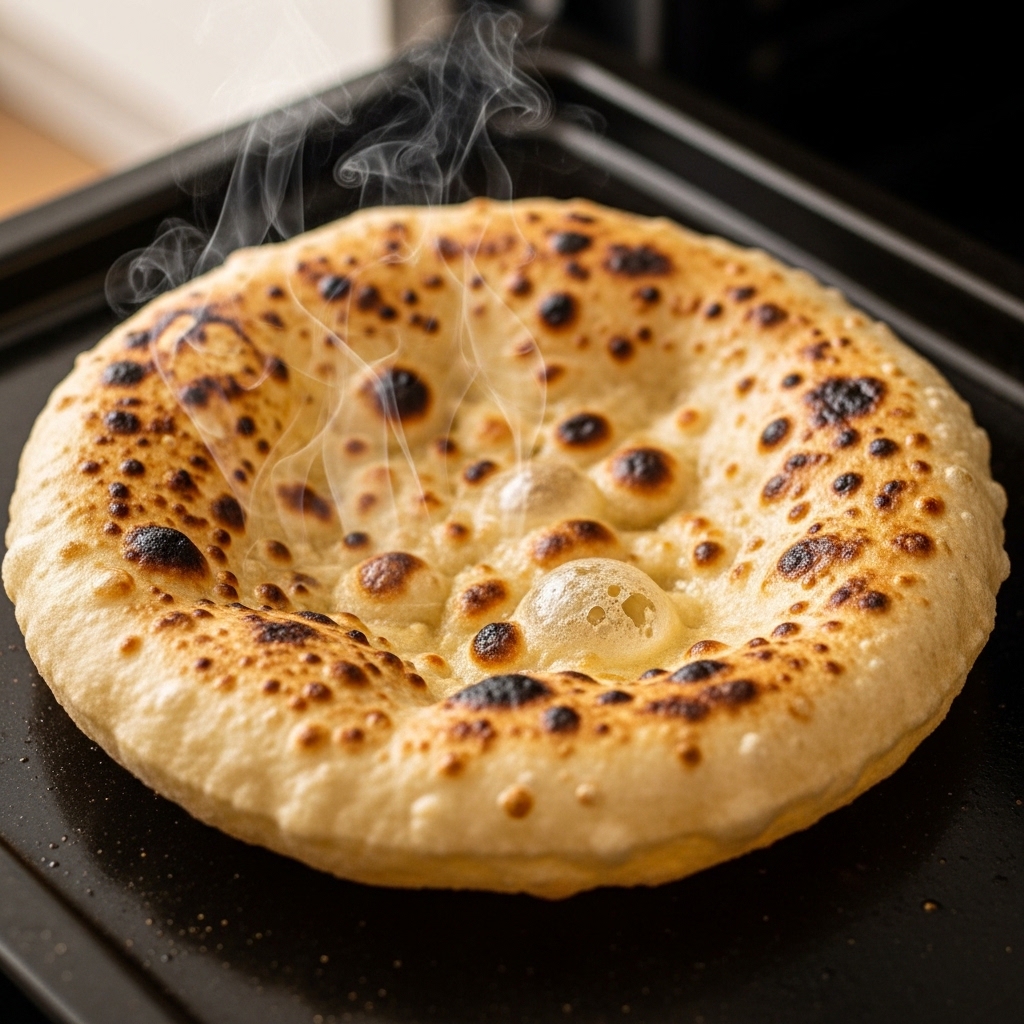
Tandoori Roti fresh from the oven
🫓

The tandoor is a cylindrical clay oven heated to 400–500°C. Roti dough is slapped onto the inside walls, puffing and charring in under 2 minutes. At home, we get surprisingly close by inverting a heavy baking tray, preheating it under the grill (broiler) for 15 minutes until it's as hot as possible, and pressing rolled roti directly onto it. The key is maximum heat from above the grill and below from the scorching tray. You'll get char spots, puffing, and that characteristic soft-chewy interior.

The dough is simple — just whole wheat flour, water, salt, and a small amount of oil. The hydration level and rest time are what matter. Properly rested dough rolls thin without tearing and puffs dramatically in the oven.


Ingredients

Makes 8 medium rotis (about 20cm diameter each).

Whole wheat flour (atta) — fine grind300g (2 cups)
Warm water (40°C)180–200ml
Salt½ tsp
Neutral oil1 tbsp
Butter or ghee (for brushing finished rotis)2 tbsp
Extra flour for dustingas needed

Method

1

Make the dough

In a large bowl, combine the flour and salt. Add oil and rub through with your fingers until it resembles coarse sand. Add warm water gradually — start with 160ml, mix with one hand, and add more if needed. The dough should be soft, slightly tacky, and not dry. If it sticks to your hands, add a little flour. Knead for 8–10 minutes until the dough is smooth, elastic, and springs back when poked. The kneading develops gluten which is what makes the roti puff dramatically.

2

Rest the dough — this is not optional

Cover the dough with a damp cloth or cling wrap. Rest at room temperature for 30 minutes. During this time, the gluten relaxes, the water fully hydrates the flour, and the dough becomes much easier to roll thin. Skipping this rest means your roti will shrink back when rolled and won't puff properly in the oven.

Oven setup is critical

Place a heavy baking tray or cast-iron pan upside down on the top shelf of your oven. Turn the grill (broiler) to maximum. Preheat for 15 full minutes. The tray must be screaming hot before you put any roti on it — test by flicking a few drops of water at it; they should evaporate instantly.

3

Divide, roll, and dampen

Divide the rested dough into 8 equal balls. On a lightly floured surface, roll each ball into a circle of about 20cm diameter — aim for even thickness, about 3–4mm. Do not roll paper-thin or the roti won't puff. Lightly dampen the top surface of each rolled roti with a wet hand or pastry brush — this creates a steamy layer inside the hot oven that puffs the bread.

4

Cook under maximum grill heat

Using tongs, place the rolled roti damp-side-down directly onto the preheated inverted tray. It should sizzle on contact. Place back under the grill at maximum heat. Cook for 2–3 minutes without opening — the roti will begin to bubble and puff. When it has char spots on top and is fully puffed, remove with tongs. If it hasn't puffed after 3 minutes, it's still fine — you'll get partial puffing depending on your oven. Immediately brush with butter or ghee and wrap in a clean cloth to keep soft.

5

Serve immediately — roti waits for no one

Fresh roti must be eaten within 5–10 minutes of cooking. This is not negotiable. Keep finished rotis wrapped in a clean cloth while you cook the remaining ones — they stay warm and soft for about 20 minutes this way. Serve with any daal, curry, or sabzi. The best pairing: a fresh hot roti with nothing but butter and a pinch of salt.


Nutrition per roti (without butter)

140
Calories
4g
Protein
28g
Carbs
2g
Fat

RotiBreadWhole WheatEverydayVegetarianVegan