Dessert · Mughal

Shahi Tukray — Bread Pudding, Royal Style

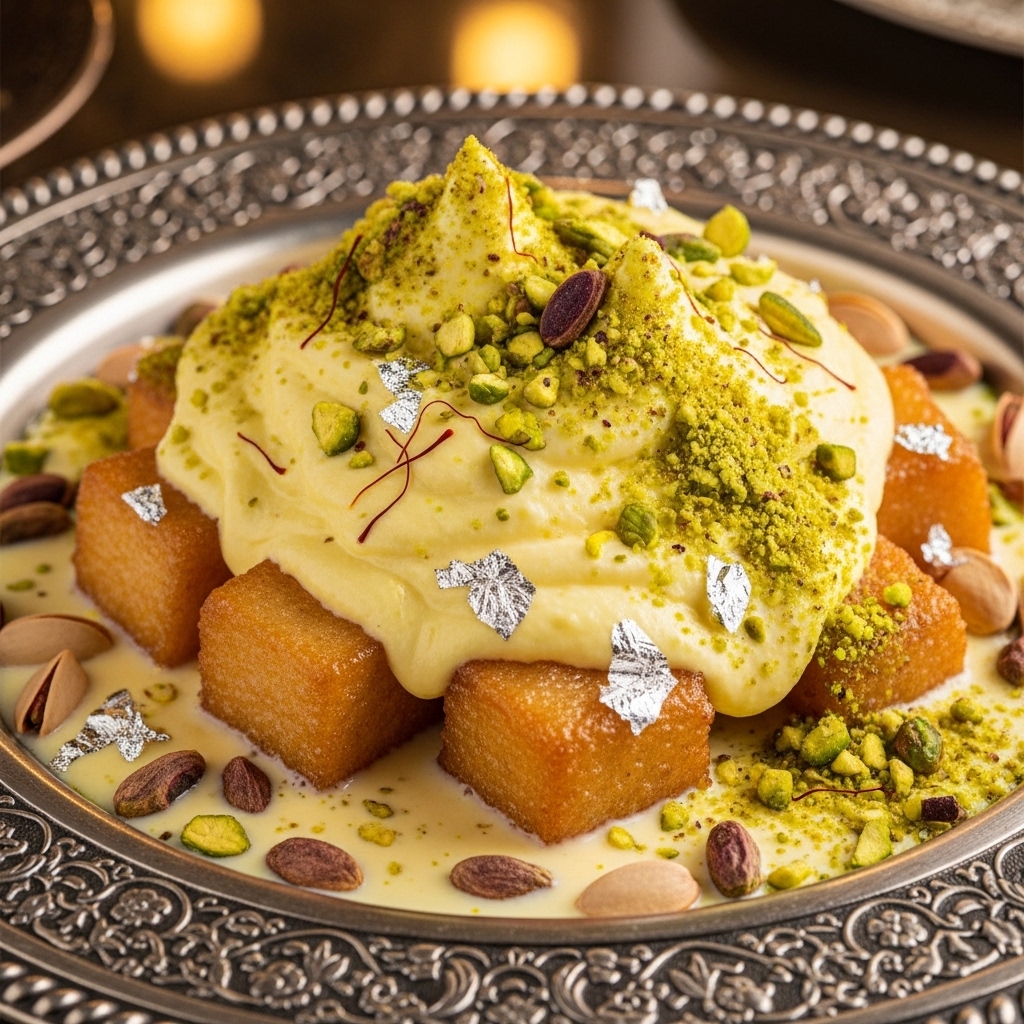
Fried bread soaked in saffron-cardamom milk, topped with thick rabri (reduced cream), and finished with crushed pistachios. This is Mughal comfort food — sweet, fragrant, and outrageously indulgent.

Prep
10 min
Cook
25 min
Serves
4
Difficulty
Easy
Serve
Warm or cold
Shahi Tukray Mughal bread pudding with rabri
🍮

Shahi Tukray translates literally as "royal pieces" — shahi meaning royal, tukray meaning pieces or chunks. It was created in the Mughal court kitchens as a way to use day-old bread (usually sheermal or white bread) in a way worthy of royalty. The key innovation was the rabri — milk reduced by two-thirds over gentle heat until thick, flavoured with cardamom and rose water. The fried bread absorbs the saffron milk from below and carries the rabri from above. The result is something between a bread pudding and a very civilised sweet snack.

This recipe works brilliantly made ahead. In fact, chilling it overnight improves the texture — the bread fully absorbs the milk and the flavours deepen.


Ingredients

For the rabri (thickened cream layer)

Full-fat whole milk1 litre
Sugar4 tbsp
Green cardamom pods, seeds only, ground4
Rose water1 tsp
Saffron strandsa generous pinch

For the fried bread

Thick white bread slices, crusts removed6 slices
Ghee or oil (for shallow-frying)4–5 tbsp

For the saffron soak

Milk (warm)200ml
Saffron strandsa pinch
Sugar3 tbsp
Cardamom powder¼ tsp

To garnish

Pistachios, slivered or roughly crushed2 tbsp
Almonds, slivered1 tbsp
Dried rose petals (optional)pinch
Extra saffron strands for decorationfew strands

Method

1

Make the rabri — start this first, it takes time

Pour the full litre of milk into a wide, heavy saucepan over medium heat. Bring to a boil, then reduce to a steady simmer. Stir every 2–3 minutes, scraping the sides and bottom. The milk will slowly reduce and thicken — a skin will form on top; stir this skin back in each time. After 20–25 minutes, the milk should have reduced to about 350–400ml. Add sugar, cardamom, saffron, and rose water. Cook for another 5 minutes. Remove from heat and cool slightly. The rabri will thicken further as it cools.

Shortcut for the rabri

If you're short on time, combine 200ml double cream with 200ml whole milk and 3 tbsp condensed milk. Simmer for 8 minutes with cardamom and saffron. Not traditional, but very close to the real result.

2

Prepare the saffron soak

While the rabri is reducing, warm 200ml milk until steaming. Add the saffron strands, sugar, and cardamom. Stir until the sugar dissolves. Leave to steep for 10 minutes — the milk will turn a beautiful golden-yellow and smell wonderfully fragrant. Set aside.

3

Fry the bread until deep golden

Cut each crustless bread slice diagonally into two triangles — this is the traditional shape for shahi tukray. Heat ghee in a wide frying pan over medium-high heat until shimmering. Fry the bread triangles in batches, pressing gently, for 1.5–2 minutes per side until deep golden-brown. They should be crispy on the outside and still slightly soft in the centre. Drain on paper towels.

4

Soak and assemble

Arrange the fried bread triangles in a single layer in a shallow dish. Pour the warm saffron milk evenly over every piece. Let the bread soak for 5 minutes — it should absorb the milk and soften slightly while remaining structured. Spoon the rabri generously over the top, covering the bread completely. Scatter crushed pistachios, almonds, dried rose petals, and a few saffron strands over the surface.

5

Serve warm or refrigerate overnight

Shahi tukray can be served immediately, warm and freshly assembled. Or refrigerate for 2–4 hours (ideally overnight) — the bread absorbs everything and the flavours meld completely. Served cold, it has a more custardy, soaked texture. Both are correct. Both are wonderful.


Nutrition per serving

480
Calories
12g
Protein
58g
Carbs
22g
Fat

DessertShahi TukrayMughalSaffronEid SpecialVegetarian